Law students enter school with the same mental health profile as the general population. By the end of the first year, rates of depression, anxiety, and substance abuse spike dramatically. Unlike medical or other professional school students, those rates never come back down.
That’s why UNC School of Law’s first-ever Well-Being Month in October 2025 wasn’t just about stress relief, but teaching students skills they’ll use throughout law school and into practice.
In October 2025, Carolina Law expanded its annual wellness week into a full month of programming. David Wright, assistant dean for student development, said the timing was intentional. “October is a pretty stressful time in the life of a law student,” said Wright. “Reading piles up. Exams loom. The office wanted to create more ways for students to address that stress.”
The response exceeded expectations. Student organizations competed to restock the Fredia Banks-Marsh Food Pantry, collecting more than 750 items in five days. The Environmental Law Project and Carolina Law Broun National Trial Team won the competition and earned additional funding. More than 75 people turned out for the Carolina Public Interest Law Organization (CPILO) 5K run/walk, raising money for public interest summer grants. Nearly 100 students attended the Mocktober Mocktail Social, sampling non-alcoholic spirits from Umbrella Dry Bar on a Tuesday evening.
But the numbers told only part of the story. What emerged was how students showed up for each other.
Hannah Ruthberg, a first-year law student who helped organize the food drive, said the response taught her something about Carolina Law. “Taking care of ourselves means taking care of each other,” said Ruthberg.
That same principle showed up at the CPILO 5K. Students, faculty, alumni, and friends of the School ran or walked together. The entry fees went directly to grants for students taking unpaid public interest internships. Students ran to help other students afford public service work.
Sean Leider, a second-year law student who helped organize the event, said the 5K works because it’s accessible. “Running and walking don’t require insane athletic ability or specific knowledge,” said Leider. “The casualness and light-heartedness brought everyone together.”
The Well-Being Scorecard encouraged students to track their wellness habits throughout the month. About 75 students logged sleep, exercise, and time away from screens, competing for prizes like basketball tickets and Carolina Law gear.
Isha Gupta, a first-year law student who teaches yoga, used the scorecard to focus on something she’d been neglecting: sleep. She won the dean’s basketball tickets, but said the wellness reminders mattered more than any prize. “Prioritizing physical and mental health makes law school much easier,” said Gupta.
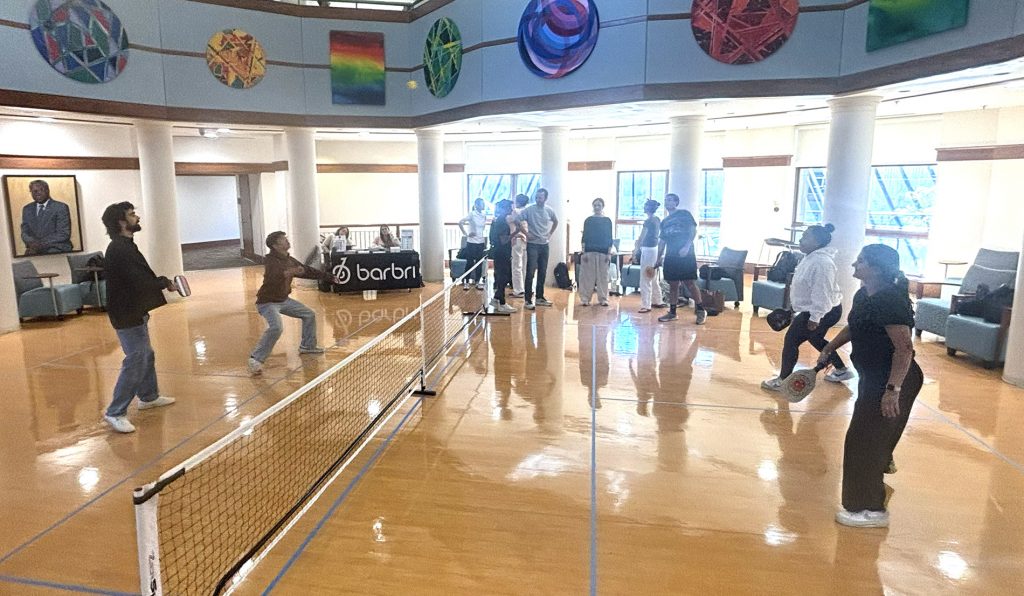
Throughout the month, students had other opportunities to connect and decompress. Puppies from Saving Grace Animals for Adoption visited campus. The new Pickleball Association introduced the law school community to the sport with demonstrations in the rotunda. Professor Bill Marshall and chief judge Richard Myers ’98 led “Bridging the Gap,” a community conversation about engaging in civil discourse. The Parents Active as Law Students organization hosted a Halloween celebration for law school families, complete with trick-or-treating, a table-decorating contest and pumpkin painting. Students attended yoga sessions and wellness workshops.
The events drew students in, but Lucinda Gardner, director of student services, said the larger goal is helping students build sustainable well-being practices. The Student Development Office (SDO) works to equip students with tools they’ll need throughout law school and into practice.
“When you’re practicing, you’re going to come across people who are struggling,” said Gardner. “Having those additional tools in your toolkit may enable you to support that person or direct them to the North Carolina Bar Lawyers Assistance Program.”
Partner organizations and staff made many of these events possible. AccessLex Institute and UNC Campus Recreation contributed programming. Tora Taylor-Glover, the Carolina Law embedded counselor from UNC Counseling and Psychological Services, and Missy Vetrano also offered support and wellness sessions.
Wright said the SDO will make Well-Being Month an annual tradition and adjust programming based on what they learn. The real measure of success won’t be October attendance numbers, but whether students carry these practices into their second year, through finals, and into their careers.