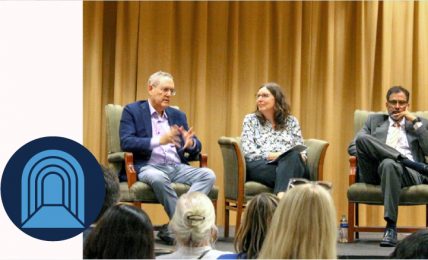
“There’s still often a misconception that you can draw a clear line between ‘artificial intelligence issues’ and more traditional legal work, when in reality, the lines are increasingly blurry,” said Caleb Griffin, associate professor of law. A software contract, for example, might quietly give a vendor the right to train AI models on a client’s data. Advising on that contract now requires enough technical fluency to recognize the risk in the first place.
That blurring frames this year’s Dan K. Moore Program in Ethics, a virtual continuing legal education program that will be held on Friday, November 13. The program builds on a simple premise that AI is no longer a niche specialty, and every business lawyer needs to understand how it shapes everyday legal advice.
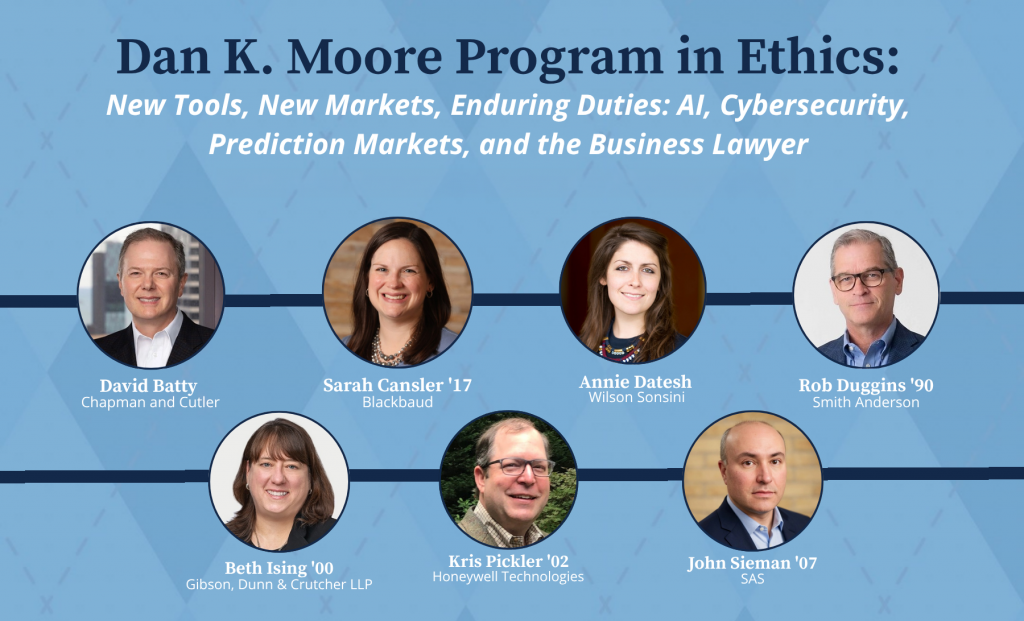
The day moves from that practical foundation into the questions lawyers now face across business practice: how AI changes legal work, what it requires of board oversight and where lawyers should draw ethical lines as the tools continue to evolve.
Griffin, whose research focuses on corporate governance and technology policy, points to boards as one clear example. He said directors cannot stop at approving a well-crafted AI policy. They need reporting mechanisms that surface AI-related risks, and they need to understand how their own use of AI, such as summarizing board materials, affects confidentiality and how much they should rely on the output.
From there, the program turns to data security and incident response, along with a shorter session on prediction markets and nonpublic information, a newer issue business lawyers are beginning to encounter. Griffin sees the event less as a lecture than as a working session. “It’s a great opportunity to step back and think through some of these emerging issues in a collaborative environment,” said Griffin, pointing to the panel of law firm partners and in-house counsel, including many Carolina Law alumni joining the program. “They can help attendees take a more proactive approach to AI and other emerging topics.”
The program carries four hours of North Carolina continuing legal education credit, including one hour of professional responsibility and two hours of technology credit. Registration is $150.