Supreme Court Fellow
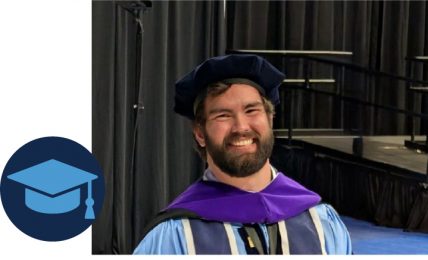
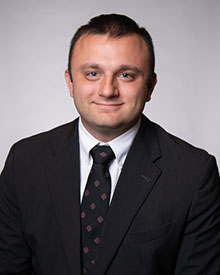
Connor Fraley ’25 spent his time at UNC School of Law chasing appellate work wherever he could find it: in the Mississippi Solicitor General’s office, in the U.S. Attorney’s Appellate Division, inside the chambers of the Chief Justice of the North Carolina Supreme Court. That pattern has now led him somewhere few law graduates ever go. This September, Fraley began a fellowship inside the Administrative Office of the U.S. Courts, one of just four Supreme Court fellows selected nationwide for the 2026-27 term.
The Supreme Court Fellows Program, established by Chief Justice Warren E. Burger in 1973, places a small, competitive cohort of fellows each year alongside top officials throughout the federal judiciary. Chief Justice John G. Roberts Jr. has called it an opportunity for exceptional individuals to contribute to the administration of justice at the national level. Fraley will spend his fellowship at the Administrative Office of the U.S. Courts, the agency that provides management and administrative support across the federal court system.
“Connor exemplifies the best of a Carolina Law education,” said Dean Andy Hessick. “His selection for this fellowship is a tremendous honor, reflecting the intellect, work ethic and genuine commitment to public service he demonstrated during his time here.”
Fraley arrives at the fellowship fresh off a clerkship with Judge Allison Jones Rushing on the U.S. Court of Appeals for the Fourth Circuit. At Carolina Law, he graduated salutatorian, was inducted into the Order of the Coif and served as articles editor of the North Carolina Law Review. He also led the Federalist Society as president, was a Blackstone fellow and sat on the Appellate Rules Committee of the North Carolina Bar Association.
Fraley has already built a notable publication record. His student note, “End Arlington Heights,” was published in the Georgetown Journal of Law & Public Policy in 2025. He and classmate Maria Colombo ’25 co-authored “Laboratories of Democracy: North Carolina’s Experiment with the Natural Right to the Fruits of Your Own Labor,” published in the Journal of Law & Civil Governance at Texas A&M University, which examines the North Carolina Constitution’s fruits clause. A third article is forthcoming in the Georgetown Journal of Law & Public Policy.
Before law school, Fraley earned four undergraduate degrees, graduated summa cum laude and Phi Beta Kappa from N.C. State University, and worked as a bar-certified paralegal throughout both his undergraduate and law studies.