By: Michele Lynn
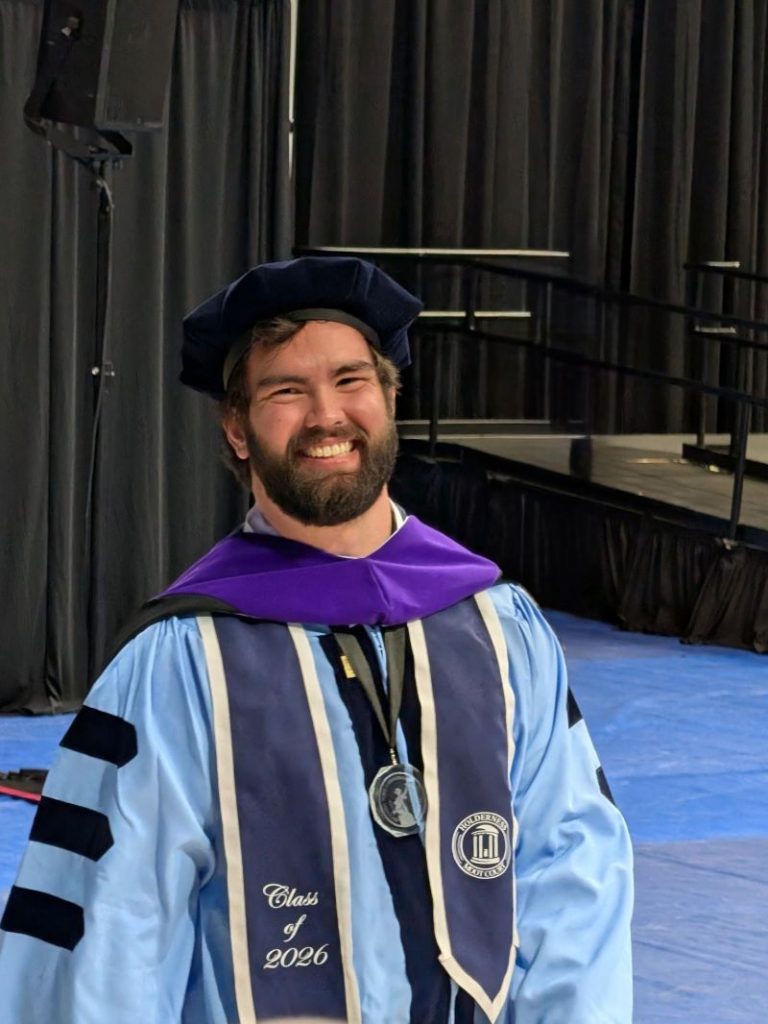
Robby Fensom ’26 is committed to “doing something good” for the state of North Carolina. Noting that his entire higher education — his degree from UNC School of Law and his bachelor’s degree from the University of North Carolina at Wilmington, where he served as student body president — has been publicly funded, he believes that there’s an inherent duty to give back to the state. “One of the ways I hope to do that is by having a positive impact on the legal landscape in North Carolina,” said Fensom.
Fensom is starting toward that goal in his current role as a clerk to Chief Judge Richard Myers II ’98 of the United States District Court for the Eastern District of North Carolina. He is excited about observing hands-on litigation in the courtroom and strengthening skills he developed in law school. “The most important thing to me, ever since I was a first-year law student, is being a good legal writer and researcher,” said Fensom. “This clerkship is a really good space to further develop those skills.”
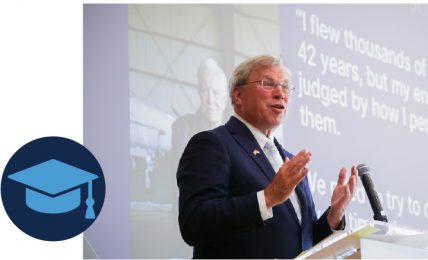
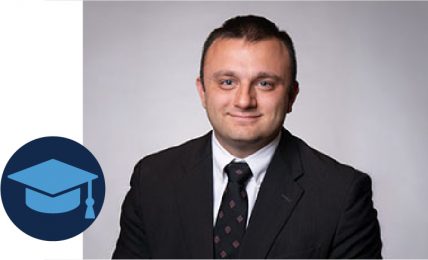
Judge Myers is not only a 1998 graduate of Carolina Law, he was also the School’s Henry Brandis Distinguished Professor of Law and director of trial advocacy from 2014 to 2019. “As someone who both attended and taught at Carolina Law, I know that the graduates there can compete with anyone for quality,” said Myers. “Carolina Law fosters critical thinking and camaraderie, qualities that make my chambers better, and a better place to be. I can also rely on the recommendations of my former colleagues, who know me, and know their students.”
Fensom said that when he was exploring clerkships, Myers was on the top of his list of judges for whom he wanted to work. “I sought a North Carolina-based judge whom, from his reputation and after reading his work from the bench, I knew to be principled and thoughtful,” said Fensom. He also appreciates that he and the judge are alumni of the same undergraduate and law schools and were both Chancellors Scholars at Carolina Law.
Being selected for the School’s largest and most prestigious scholarship award gave Fensom the ability to pursue the opportunities that he found most interesting and the work that he actually wanted to do, without having to worry about what would pay the bills. Fensom said, “I’m so thankful for the Chancellors Scholars scholarship, because it enabled me to pursue public interest work at The Institute for Justice during my first summer and work in a boutique litigation firm during my second summer.”
Fensom worked on a variety of issues at the Randazza Legal Group, but especially enjoyed copyright and defamation cases. The firm has earned a nationwide reputation as a “team of attorneys committed to protecting freedom of expression and the five freedoms enshrined in the First Amendment.”
During a gap year between undergraduate and law school, Fensom served in the UNC System Presidential Scholar Program, where he gained firsthand experience in public higher education leadership and administration by working closely with staff in the UNC System Office. From that experience, he gained a mentor in Peter Hans, president of the UNC System, as well as the knowledge that he is more interested in working in litigation than in politics.
Fensom appreciates the support he received from Carolina Law professors as well as classmates. “I am grateful to all of my teachers,” said Fensom. “Professors William Marshall and Eisha Jain have been so helpful to me during some of the low points and crossroads that have come up. I was able to email them and then have a 40-minute chat with them, during which they let me know that there aren’t any bad decisions and then outlined some of the pluses and minuses associated with each choice I was considering.”
He emphasized how serving as executive comments editor for the North Carolina Law Review and on the Holderness Moot Court appellate advocacy team was formative to developing his legal research skills and his ability to create and rebut oral arguments. “If you looked at a pie chart of my time during law school, you would see that law review took up a pretty substantial portion of that,” said Fensom. “I thought that when I walked across the stage at commencement, I would feel a weight lifted, which would be law review.”
Instead, Fensom said he misses the conversations with his peers that flowed from law review. “Some of my deepest friendships in law school were forged from those experiences of late-night cite checking and considering the best way of approaching professors with uncomfortable feedback,” said Fensom.
But Fensom isn’t looking back. He is excited about working with Judge Myers and then working as a litigator. “I expect that my career will be dedicated to furthering free expression,” said Fensom. “I find the issues that come up in copyright and the ways that copyright is occasionally used by plaintiffs to stifle free expression to be especially interesting.”